
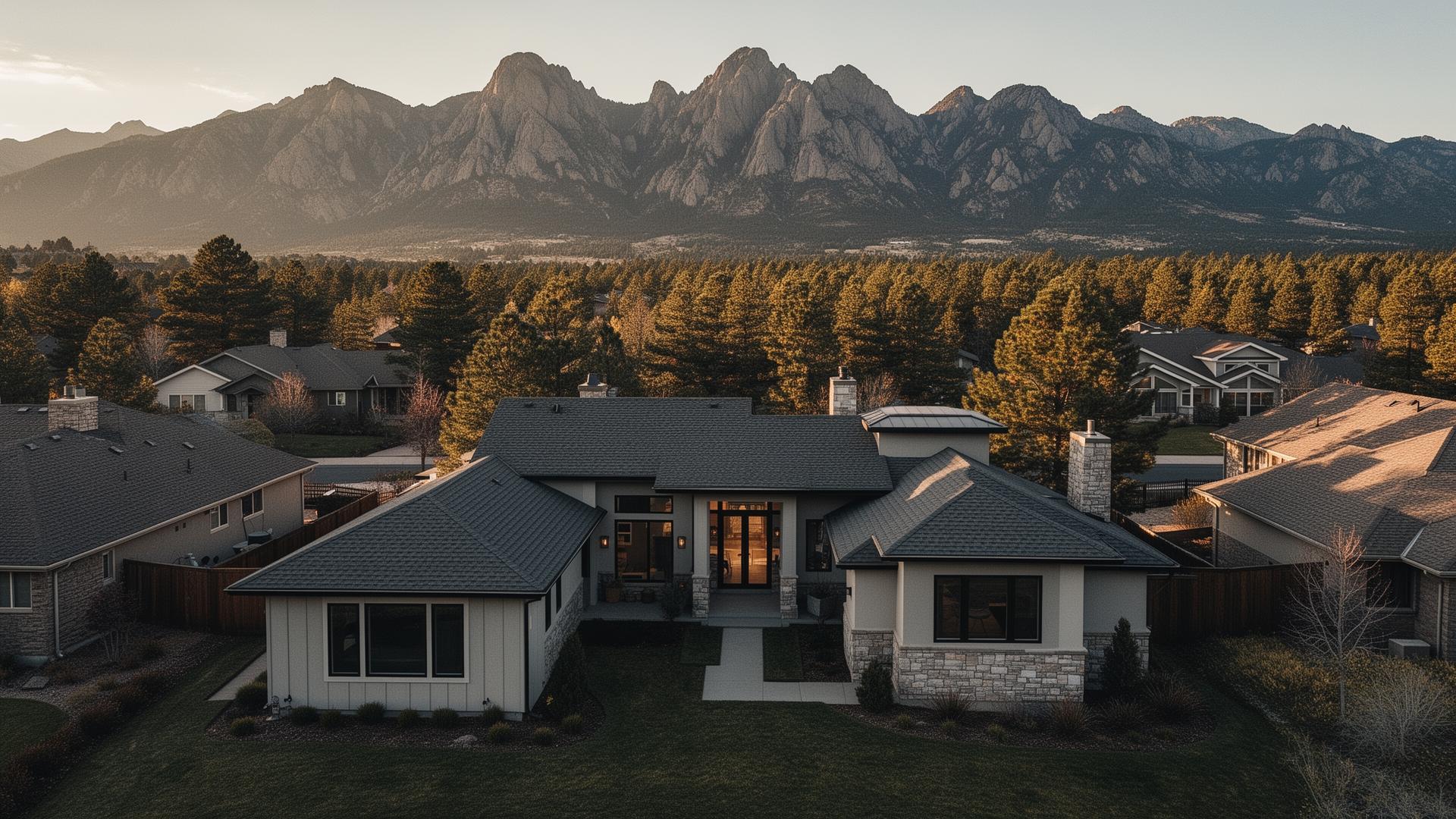
Trust in private markets is earned through long-term performance and results, not decks. Most sponsors treat diligence as a hurdle. We treat it as the sales process. The framework below is the one a careful advisor would apply to any private real estate fund. We think it's the right framework, so we've answered it in the open — and flagged the items that should be verified against executed documents rather than taken from a web page.
What do you actually own?
In most private real estate funds, you own units in a pooled entity and your claim runs to the fund, not to any property. Whether that claim survives a sponsor failure depends on structuring decisions most offering documents don't volunteer.
Here is our structure. Each property in the Ownify portfolio is held in a series LLC, with 10,000 "bricks" (membership units) representing 100% of the value of the home. The resident co-owner, who we call the Owni, purchases a 2% stake at move-in and builds toward 10% over five years through fixed monthly payments. The Ownify Home Fund contributes the remaining capital and holds the remaining bricks in the same LLC — moving from 98% to 90% of each home as the Owni builds equity.
Asset-level ownership is traceable. The fund's interest is in identified homes through identified series, not a blind pool. You can see what the portfolio owns down to the address.
The occupant is a co-owner in the same entity, not a tenant. That is the core of the structural alignment thesis: co-owners behave differently than tenants, and that difference shows up in the operating numbers below.
The Ownify Home Fund and Ownify Home Fund II LLC are Delaware limited liability companies structured as private real estate funds under Rule 506(c) of SEC Regulation D. The Manager is Modern Capital Co, a Delaware corporation.
How are homes valued, and by whom?
Private assets are marked, not traded, so valuation methodology is where reported returns are made or unmade. The question to press with any sponsor: is the valuation used for reporting the same one used to price transactions?
In our structure it has to be, because transactions happen every month. Ownify's platform values each home monthly, and bricks are exchanged between the fund and each Owni at current market value in that month. The valuation isn't a quarterly mark for a report — it's the price at which real money changes hands, twelve times a year, in both directions. An Owni buys slightly fewer bricks when prices peak and slightly more on dips, which creates dollar-cost averaging for them and a continuously tested mark for us.
Entry pricing gets the same discipline. The basis for any investment stays with you throughout its life, so we combine data-driven valuation (several hundred variables per home) with in-person inspection and an agent compensation structure that pays buyers' agents more for negotiating the price down. Since inception, the fund has closed on its investments at 4% below market value on average.
There is also a floor. Each Ownify agreement contains a purchase option allowing the Owni to buy the home at the higher of fair market value or 5% above the initial purchase price. That "at the money" option means investors lock in a minimum home price appreciation and benefit from appreciation above the floor.
Where do returns come from?
Return attribution should be stated plainly enough to be checked. Ours has three components: home price appreciation, moderate fixed-rate leverage, and cash yield from the occupancy fee component of each Owni's monthly payment.
| Component | Contribution to target |
|---|---|
| Home price appreciation (underwritten) | 2–4.0% |
| Debt leverage (fixed rate, 65–70% target ratio) | 5–7.5% |
| Cash yield (occupancy fee component) | 4.5% |
| Target total return | 11.0–16% |
Against that target, our realized annual net return from 2023 through Q1 2026 has been 12.4% after all fees, driven by realized home price appreciation of 2.8% that translated into 8.0% equity appreciation, plus a 4.4% cash yield. We underperformed our appreciation assumption over that period and still delivered a double-digit net return, which is the shape you want a return engine to have.
One structural note on the leverage: the fund uses fixed-rate debt. Fixed rates lock in borrowing costs while inflation reduces the real value of the debt over time, which is part of why single-family residential has historically been an effective inflation hedge.
Targeted returns are based on the Manager's assumptions and are not a guarantee. Past performance is not necessarily indicative of future results. The offering documents contain the complete risk factors, and prospective investors should rely on those documents.
What protects investors on the downside?
Four mechanisms, each of which we can measure in our own portfolio rather than assert:
Owners maintain what they own. Who ever washes a rental car? In the Ownify portfolio, property maintenance and repair costs are running about 60% below industry average, because Ownis take care of homes they co-own.
No vacancy, no turnover. The fund doesn't invest in a home until the customer has signed their agreement, so there are no upfront vacancy or lease-up costs. We have seen no customer turnover in the program to date, against single-family rental industry vacancy averages of 3–4%.
No underwater moral hazard. Unlike traditional homeowners who may face negative equity in downturns, Ownis are never underwater; their equity is evergreen. That removes the strategic default incentive that damages lenders in stressed markets, and it protects investors the same way.
Underwriting selectivity. Our acceptance rate is under 2% of applicants. The current portfolio averages a 720 FICO and a 34% payment-to-income ratio, with zero late payments and zero defaults to date.
Pressure-test all four. They are the load-bearing walls of the thesis, and they are all observable in portfolio data we will hand over.
What are the liquidity provisions?
Here we owe you a distinction most sponsors blur: liquidity at the asset level and liquidity at the fund level are different things, and ours run in opposite directions.
At the asset level, the structure is unusually liquid for private real estate. Every home carries an embedded buyer: the Owni, who is purchasing bricks monthly and holds an option to buy the home outright. Traditional single-family disposition costs run 6–8% of property value in marketing and brokerage. The Ownify structure builds in a likely sale of the home to the Owni at the end of the five-year program without those costs. The exit isn't a hope for a future buyer; some portion of it is contracted from day one.
At the fund level, interests are illiquid, and we say so plainly. There is very limited liquidity in the investment, no secondary market for interests is expected to develop, and there are meaningful restrictions on withdrawal and transfer. That is stated in our offering documents and it should be part of your sizing decision, not a discovery. Our first fund was a five-to-seven-year closed-end fund; the Ownify Home Fund II is an evergreen fund with a two-year lockup followed by quarterly redemption windows.
What about taxes?
The fund is structured to pass through the tax advantages of direct residential ownership. Depreciation lets investors deduct a portion of each property's cost basis annually over its 27.5-year useful life under MACRS. As an example, an Ownify property with a $195,000 depreciable basis generates approximately $7,091 in annual depreciation deductions. These reduce taxable income even when the property generates positive cash flow; depreciation is a non-cash expense, which makes it a powerful tax deferral tool.
Depreciation allocations appear on Schedule K-1, allowing investors to claim their proportional share of deductions against income generated by the fund investment as well as potentially other passive income.
The fund is also open to investors using self-directed IRAs and self-directed 401(k)s, as well as donor-advised funds through our partnership with Realize Impact. Investors should consult their own tax professional about their situation.
Who manages this, and what will you receive?
The Manager of the Ownify Home Fund LLC is Modern Capital Co, a Delaware corporation. Frank Rohde founded Ownify in 2022 and previously served as CEO of Nomis Solutions, a mortgage pricing and analytics company, after senior roles at FICO. Ben Herold, COO, was previously COO of Divvy Homes, where he led the acquisition and management of more than 5,000 single-family homes, and has deployed more than $500M in direct real estate investments across roles at SoFi and PIMCO. Final investment decisions on each home are reviewed by both.
We say this rarely and mean it: the team has spent careers on exactly the two disciplines this model requires — mortgage credit analytics and single-family operations at scale.
Fund information and subscription run through our investor portal at ownifyfund.portal.agorareal.com.
The diligence checklist, with our answers
This is the checklist we would apply to any private real estate fund. The third column is us. Items marked [CONFIRM] are verifiable facts about a securities offering that should be checked against executed documents, not accepted from a web page.
| Diligence question | What to look for | Ownify Home Fund |
|---|---|---|
| What do investors own? | Traceable claim on identified assets | Bricks (membership units) in per-home series LLCs, held alongside the resident co-owner. |
| Offering exemption | Stated plainly | Rule 506(c) of SEC Regulation D. Delaware LLC. Manager: Modern Capital Co, a Delaware corporation. |
| Valuation | Independent of reporting incentives | Monthly platform valuation, tested by actual brick transactions at that price each month. |
| Entry discipline | Basis protection | 4% below market on average at entry since inception; walk-away discipline on price. |
| Downside protection | Structural, not narrative | Purchase option struck at the higher of fair market value or 5% above initial purchase price; evergreen resident equity, so no underwater position. |
| Income quality | Source and durability | Occupancy fee paid by co-owners averaging 720 FICO and a 34% payment-to-income ratio; zero late payments and zero defaults to date. |
| Operating costs | Versus industry | Maintenance and repairs running ~60% below industry average; no vacancy or lease-up cost, since the fund does not invest until the agreement is signed. |
| Leverage | Rate risk stated | Fixed-rate debt at a 65–70% target ratio. |
| Asset-level exit | Who buys, at what cost | Embedded buyer — the resident co-owner, who buys bricks monthly and holds a purchase option; avoids the typical 6–8% disposition cost. |
| Fund-level liquidity | Honest disclosure | Limited. No secondary market is expected to develop; restrictions on withdrawal and transfer apply. |
| Tax treatment | Form and pass-through | Schedule K-1; MACRS depreciation pass-through over a 27.5-year life; open to self-directed IRA, solo 401(k) and donor-advised fund subscriptions. |
| Manager track record | Relevant, at scale | FICO and Nomis Solutions (mortgage credit analytics); Divvy Homes COO, 5,000+ single-family homes; $500M+ deployed across SoFi and PIMCO. Manager of first Ownify Home Fund since 2024. |
| Audit and reporting | Named auditor, stated cadence | Verivest acts as third-party fund administrator. |
What is in the diligence pack, and in what order?
We keep a standing index of the documents we provide, sequenced in the order an advisor normally works through them — thesis, offering documents, structure, valuation, portfolio, reporting, administration, audit, debt, liquidity, tax and manager background.
Ownify Home Fund diligence pack index
One page, sixteen documents, in working order — with what each one answers and what to press on. No form, no gate.
Where does this sit among alternative investments?
Alternative investments are usually held for one of three reasons: return in excess of public markets, diversification away from listed beta, or an income stream with a different driver than credit spreads. Private real estate is asked to do all three, and the sub-strategies differ sharply in how they do it — core rental yield, value-add repositioning, credit, and structures like this one where returns come from an occupant purchasing equity on a schedule.
The diligence questions above are what separate them in practice, not the strategy label. Two funds pursuing "single-family residential" can differ completely on what the investor owns, who marks the assets, where title sits, and whether there is any contractual exit. Compare on structure, valuation independence, custody, audit status and liquidity terms — then decide whether the strategy is worth the wrapper.
Related reading on the category: how fractional real estate investing works, diversification for business owners and workforce housing as an ownership investment.
Frequently asked questions
- What is a private real estate fund?
- A pooled vehicle, usually offered under a private placement exemption, that acquires and holds property on behalf of investors. It differs from a public REIT in that it doesn't trade, isn't priced daily, and is generally available only to accredited investors. The Ownify Home Fund is a Delaware LLC offered under Rule 506(c) to verified accredited investors.
- What should a real estate due diligence checklist cover?
- What investors legally own, the offering exemption, valuation methodology and independence, entry pricing discipline, downside protections, income quality, operating costs, leverage and rate exposure, custody, exit mechanics at both asset and fund level, tax treatment, manager track record, and audit status. The governance table above is our working version.
- What is a private placement memorandum?
- The offering document for a private securities offering, setting out the investment, structure, risks, fees and terms. It is a disclosure document rather than a marketing document. The risk factors and fee sections generally repay more careful reading than the strategy section, and an offer to invest is made only through those documents.
- How are private real estate investments valued?
- Methods vary from annual appraisals to internal marks. The question that cuts through: is the reporting valuation the same price at which money actually transacts? In the Ownify structure, bricks trade between the fund and residents at the platform valuation every month, so the mark is continuously tested by real transactions.
- How much of a portfolio should sit in private real estate?
- There is no universal figure. Sizing is usually driven by liquidity needs, existing real asset exposure, and how much capital can be committed for the stated hold without constraining other obligations. Fund-level interests here are illiquid by design; the allocation should assume a five-plus year commitment.
Reviewed by Frank Rohde, CEO, Ownify. Last reviewed: . This page does not constitute a recommendation, an offer to sell, or a solicitation of an offer to purchase any securities. An offer to invest will be made only by means of the offering documents furnished to prospective qualified investors, which contain a description of the material terms, including risk factors, conflicts of interest, fees and expenses, and tax aspects. Targeted returns are based on the Manager's assumptions and should not be regarded as a representation that they will be achieved. Past performance is not necessarily indicative of future results. The investment involves a high degree of risk, including possible loss of principal, and there is very limited liquidity.